Table of Contents

  • Why Cast Iron?
  • Common Pie Questions
  • How Much Pie Dough Do I Need? 
  • Field Pie Tips
  • Why Pie Feels Right in Cast Iron

There's something wonderfully unfussy about baking pie in cast iron. No delicate ceramic dish to worry about. No flimsy aluminum pan bending as you transfer it to the oven. Just one skillet that can handle juicy fruit fillings, buttery crusts, bubbling edges, and whatever else the season throws at it.

And perhaps most importantly: cast iron makes really, really good pie. The same qualities that make cast iron great for searing and roasting are exactly what make it excel at baking. It retains heat exceptionally well, which helps create golden crusts, bubbling fillings, and beautifully caramelized edges.

Over the years we've baked all kinds of pies in our skillets:


Why Cast Iron?

Better Bottom Crusts

  • The biggest advantage is heat retention. Unlike thinner pie tins, cast iron stores heat and releases it gradually, which means the bottom crust starts baking immediately and continues browning evenly throughout the bake. The result is a crust that's crisp and golden rather than pale or soggy. If you've ever lifted a slice of pie only to have the bottom crust collapse under the weight of the filling, cast iron is often the solution.

Even Baking

  • Cast iron heats slowly but evenly. Fruit pies bubble consistently from edge to center, custard pies set gently without dramatic temperature swings, and savory pies brown beautifully across the surface. Once the skillet is hot, it stays hot, giving you more predictable results and fewer surprises.

It Goes Straight to the Table

  • The pie comes straight out of the oven and directly onto the table. No transferring to a serving dish. No worrying about breaking a delicate pie plate or losing a piece during the move. Just a beautiful cast iron skillet filled with something homemade, ready to be sliced and shared. For us, that's part of the magic of pie in cast iron.

Common Pie Questions: 

Do I Need to Preheat the Pan?

Generally: No. Most skillet pies begin in a room-temperature skillet. Roll the dough, place it directly into the skillet, add your filling, and bake. The exception is recipes where you're intentionally caramelizing something first.

  • For example: Top-crust only pies that begin by cooking down fruit or sautéing vegetables directly in the pan. 

Which Skillet Size Should I Use?

  • No.6 Skillet   

    Best for:

    • Small pies for 2–4 people

    • Galettes

    • Small pot pies

  • No.8 Skillet

    Our favorite pie size and closest to a true 9-inch deep dish pie plate. It strikes the perfect balance between crust and filling. Ideal for:

    • Apple pie

    • Blueberry crumble pie

    • Pecan pie

    • Chicken pot pie

    • Pear cranberry pie 

  • No.10 Skillet 

    For feeding a crowd. We love this size for large savory pies. You'll get:

    • More filling

    • Slightly thinner crust

    • Generous slices

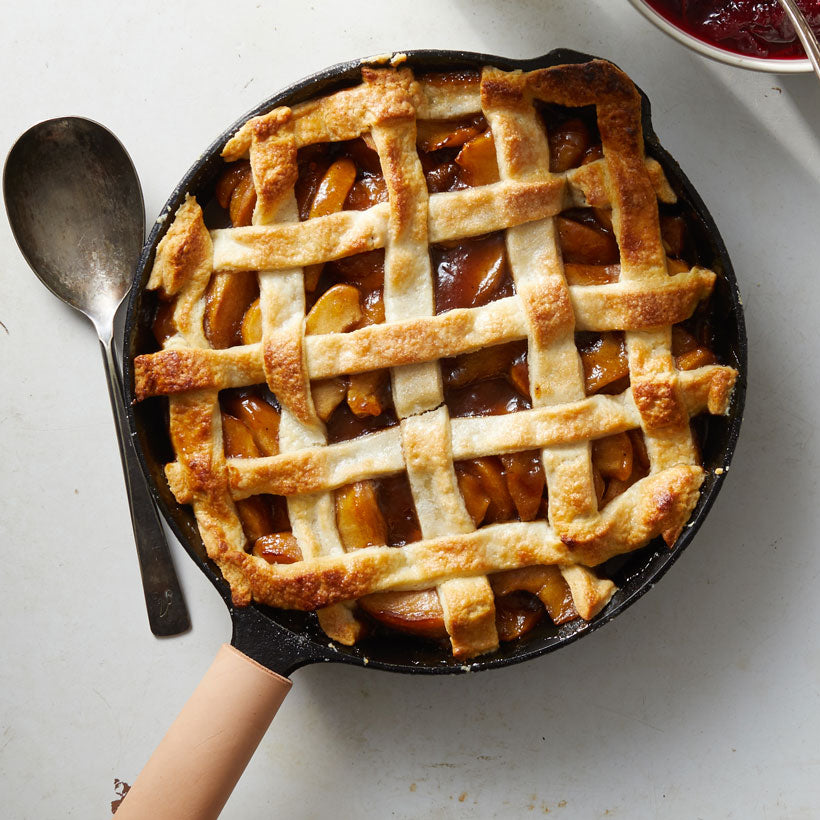
Apple pie with lattice crust

How Much Pie Dough Do I Need?

This is one of the most common questions we get. It totally depends on the style of the pie! We love a double crust like a chicken pot pie, a single crust for something like a pecan pie, or a crumble top for a fruit pie. 

All-Butter Pie Dough

We use this recipe for a standard single crust pie.. Here’s how we do it. 

  • The No.6 Field Skillet: 

    • 1x for a single crust

    • 2x for a double crust pie

  • The No.8 Field Skillet: 

    • 1.25x for a single crust

    • 2.5x for a double crust pie

  • The No.10 Field Skillet:

    • 1.5x for a single crust

    • 3x for a double crust pie

Field Pie tips: 

  • Always place the skillet on a baking sheet to ensure any bubble over doesn’t fall into the oven!

  • Vent your double crusts! A few slits on top let steam escape and keep the crust crisp.

  • Don't underbake. The filling should bubble vigorously. If the center isn't bubbling, the starches haven't fully thickened. This is especially important for fruit based pies. Trust the bubbles.

  • Let it cool. This is painful advice. Warm pie smells amazing. But fruit pies especially need time to set. 

  • For savory pies, cook the filling first.Removing excess moisture keeps the crust crisp.

  • Don’t skip the egg wash. That shiny golden crust? Almost always egg wash. One egg. A splash of water or milk. Brush generously. For fruit pies, you can also sprinkle turbinado sugar for an added sweet crunch. 

  • Pie for breakfast is completely acceptable.

Why Pie Feels Right in Cast Iron

There's something satisfying about baking pie in the same pan you use for steak. It serves as a reminder that cast iron isn't specialized cookware, it's simply good cookware. The same skillet that holds summer blueberry pie can bake an apple pie in the fall, a chicken pot pie in the winter, and cornbread any day of the year. That's exactly why cast iron has been passed down for generations. Not because it's precious or reserved for special occasions, but because it gets used, season after season, year after year.