The Field Skillet: lighter, smoother cast iron.
A smoother, lighter pan modeled on the best vintage American skillets. It's the one you'll reach for every day, and it gets better every time you cook.
-
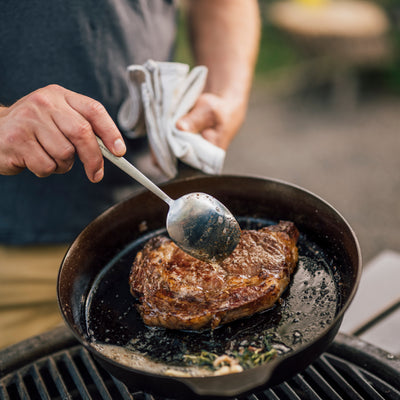
Sear a steak.
It holds heat for a hard, even crust.
-
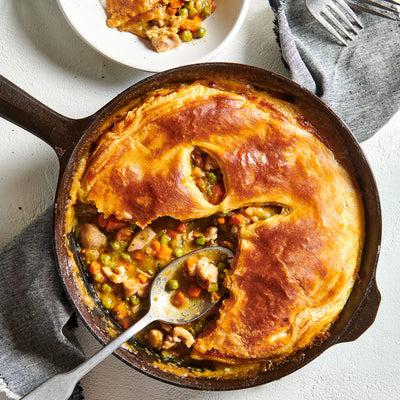
Bake a pie.
From stovetop to oven to table.
-
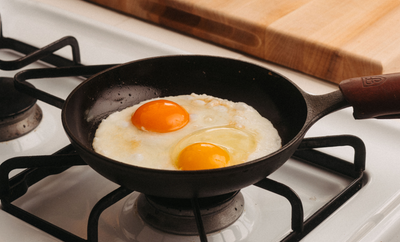
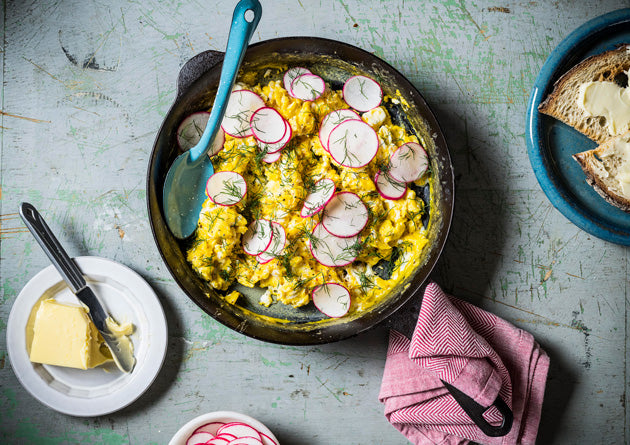
Fry an egg.
Smooth enough that it slides right off.
As seen in


What makes the Field Skillet special.
-
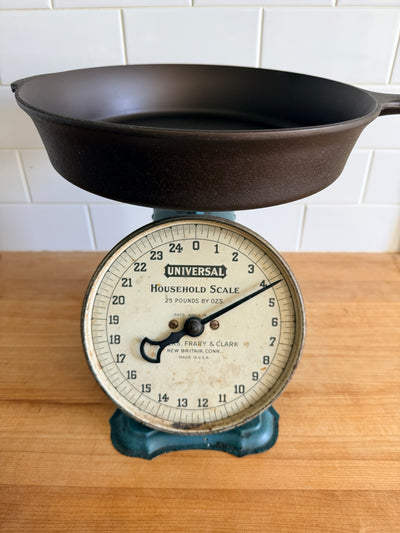
The right weight.
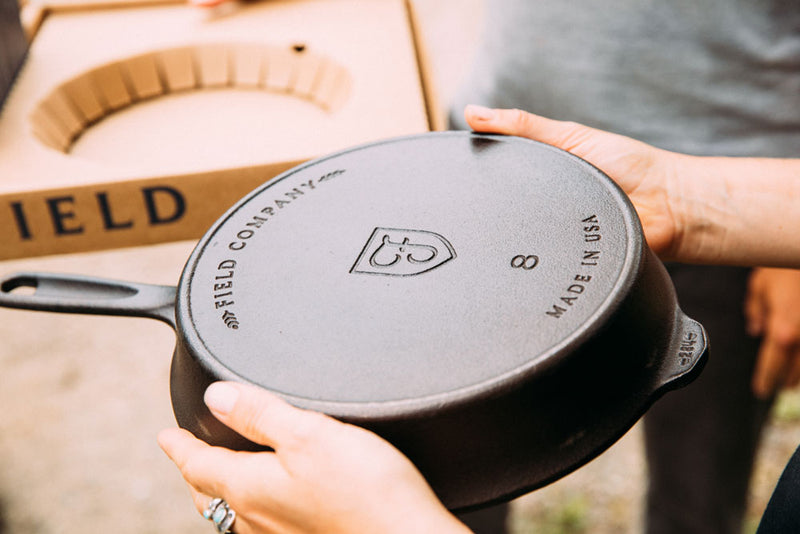
Heavy enough to hold heat, light enough to reach for every day. Our No.8 weighs 4.3 lbs, about a pound and a quarter less than a Lodge 10.25".
-
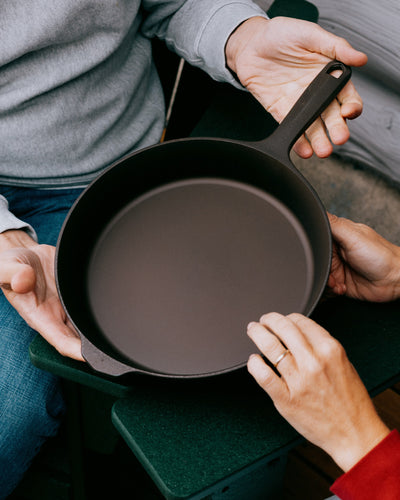
Smooth, but not too smooth.
Like the best vintage pans, the cooking surface is polished smooth. We leave a microscopic texture so seasoning has something to grip, and it builds fast.
-
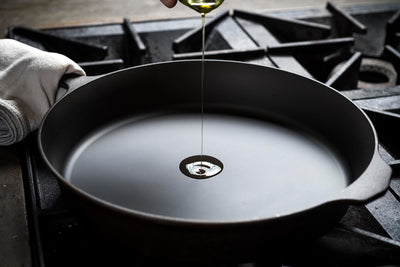
Seasoned and ready to cook.
Every pan is hand-seasoned with several coats of grapeseed oil, so it arrives ready to pass the fried egg test.
-
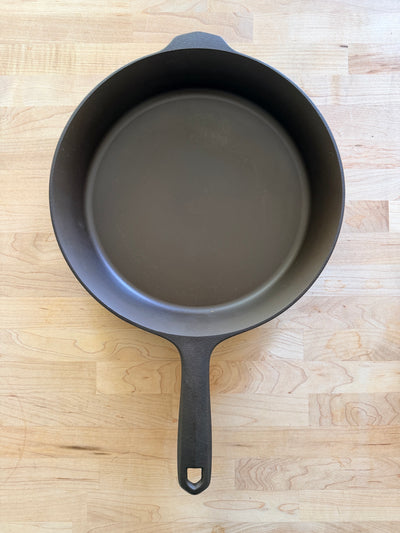
Sized to your burner.
The No.8 matches the most common burner size, so heat spreads evenly with fewer hot spots.
-
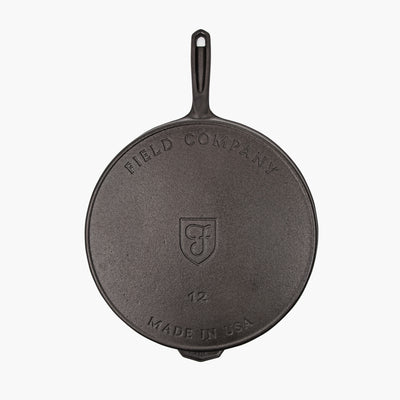
A flat bottom for every cooktop.
Gas, induction, glass top or a campfire. It sits flat and heats evenly on all of them.
-
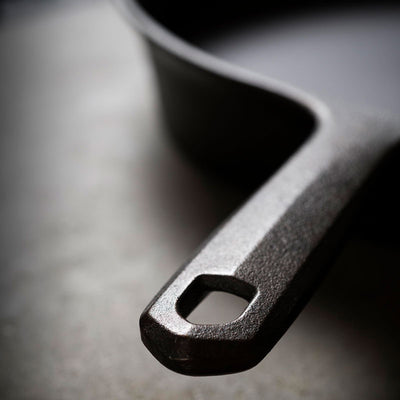
A simple, balanced handle.
Long enough to choke up on for leverage, shaped to feel good in your hand from stove to table.
-
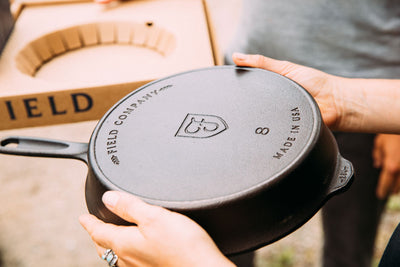
Made in the USA. Guaranteed for life.
Cast in America with specialty foundries in Wisconsin, Missouri and Indiana. If it ever fails, we replace it.
“It costs more than Lodge, but it works so, so much better”
“This Sleek Skillet Changed the Way I Think About Cast Iron — I Wish I'd Discovered It Sooner”
Easy to own. Better every year.
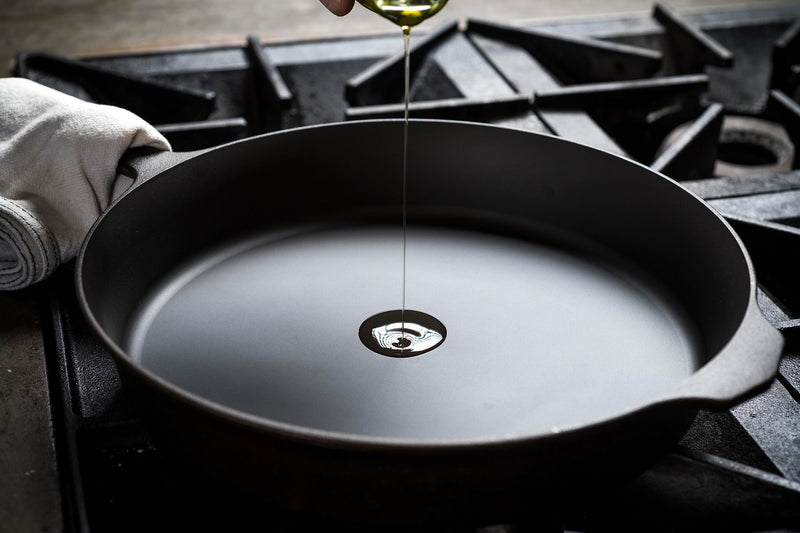
How we got here.
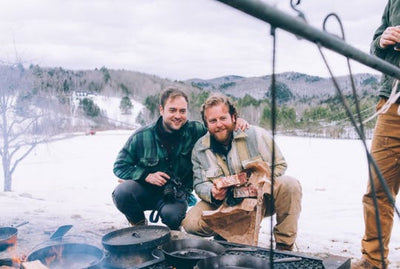
Two brothers, a 1930s Wagner and one question.
-
 The question
Why don't they make them like they used to?
Stephen and Chris Muscarella grew up cooking on their family's cast iron. The new pans they bought as adults were heavier and rougher than the 1930s pans they'd inherited.
-
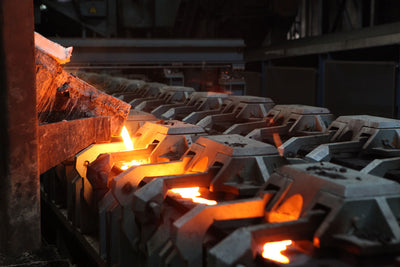 Poland
Foundries said it couldn't be done.
Modern foundries told them nobody could pour iron that thin anymore. So they found a professor who studied thin-walled castings and went to his lab in Poland to learn how.
-
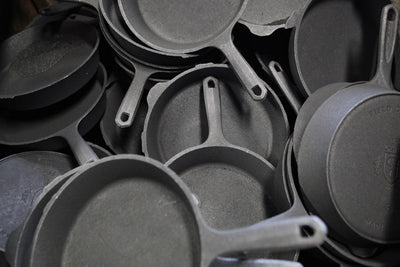 Hundreds of calls
Then they found a fair price.
Many foundries wanted $100 just to cast one pan. They kept calling until they found American makers who could do it right at a price people could pay.
-
 March 2016
12,553 backers. $1.6 million.
They put the No.8 Field Skillet on Kickstarter with a $30,000 goal. A month later, 12,553 people had pledged $1,633,361.
-
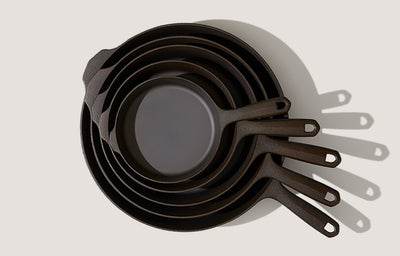 2026
2026Ten years later, made the same way.
Today we make skillets, lids, Dutch ovens and griddles, and every cooking surface is still polished smooth and hand-seasoned.

“This is a very nice pan. I have a couple of 100 year old cast iron skillets from my great grandmother and had been looking for another that was also somewhat lighter weight. This pan is great. It has been easy to season and is a great size.”
“I hesitated purchasing this pan due to the price and my experience with non stick and even cast iron pans. I followed the directions and after a few uses it is very non stick.”
“You will not regret purchasing these. Heirloom quality cast iron that makes you love cooking all over again.”
Where to start
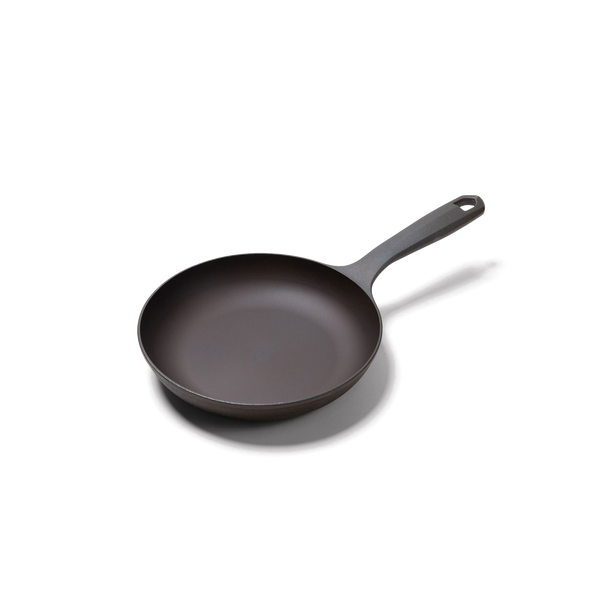
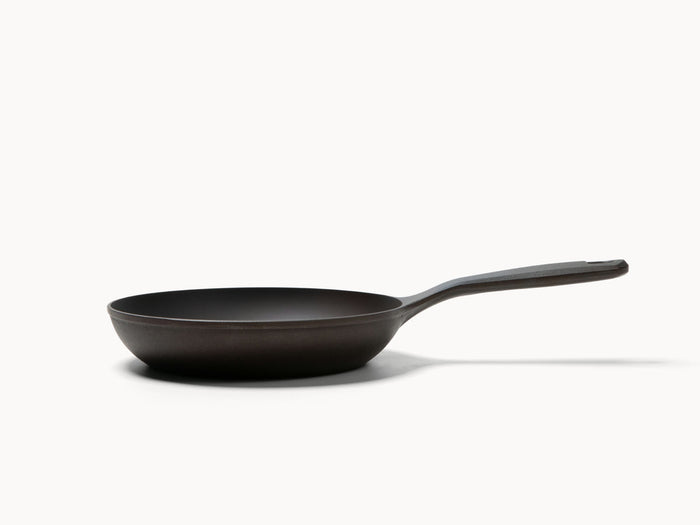
No.5 Chef Skillet
Retire your nonstick egg pan. This one is small, curved and ready for breakfast.
Retire your nonstick egg pan.
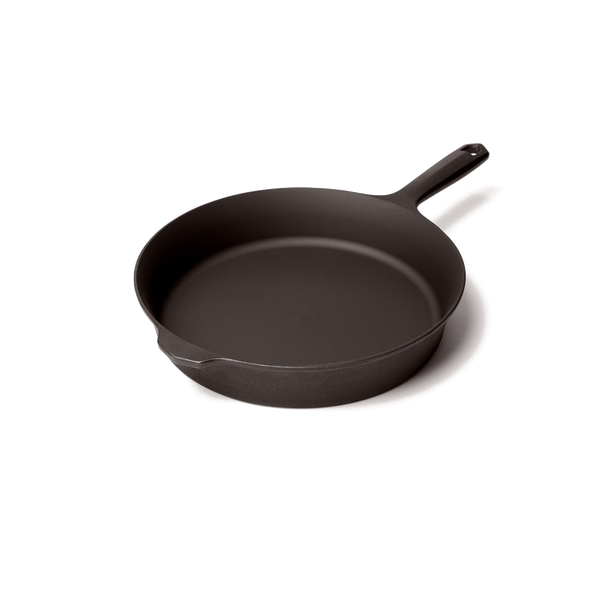
No.8 Cast Iron Skillet
If you only own one skillet, make it this one. Sized for everyday dinners and baking.
If you only own one skillet, make it this one.
Happiness guarantee
Cook on it for 45 days. If it isn't the pan you reach for, send it back.
New to Field? Get 10% off your first order when you join our email list.
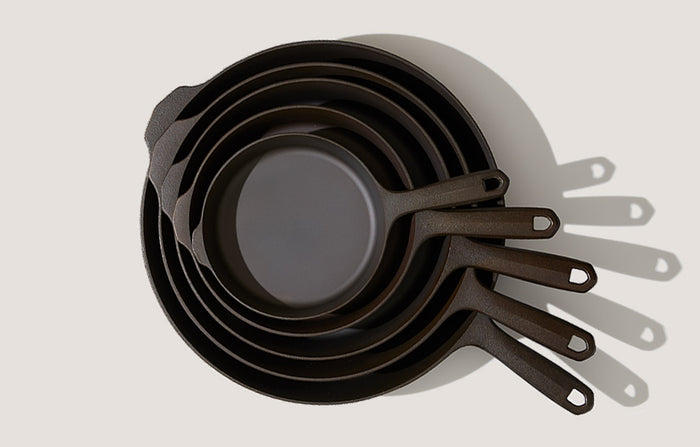
See what else we have
Questions
Both are cast iron, and both are made in the USA. The difference is the finish and the weight. Lodge leaves the cooking surface the way it comes out of the mold, so it stays rough, and its 10.25" skillet weighs about 5.6 lbs. Ours is polished smooth after casting and weighs about 4.3 lbs. The smoother surface seasons faster, releases food more easily and cleans up quicker. See the full Field vs Lodge comparison →
It's true, our pans cost more than your average mass-produced pan. We make them in small batches with American specialty manufacturers, polish every cooking surface, and hand-season and inspect each one. But a nonstick pan wears out in a few years and has to be replaced. A Field Skillet gets better with use and is guaranteed for life, so if you cook on it every day for decades, it costs pennies a meal. And you can cook on it for 45 days before you decide.
Almost everything. Cast iron holds heat, so it's made for a hard sear on a steak or a golden crust on a pie, and a smooth, well-seasoned pan is just as good for eggs, pancakes or sautéing vegetables. It goes from stovetop to oven to grill, so a whole roast chicken, baked fish, a frittata or a skillet cookie all work too. Browse our cast iron recipes →
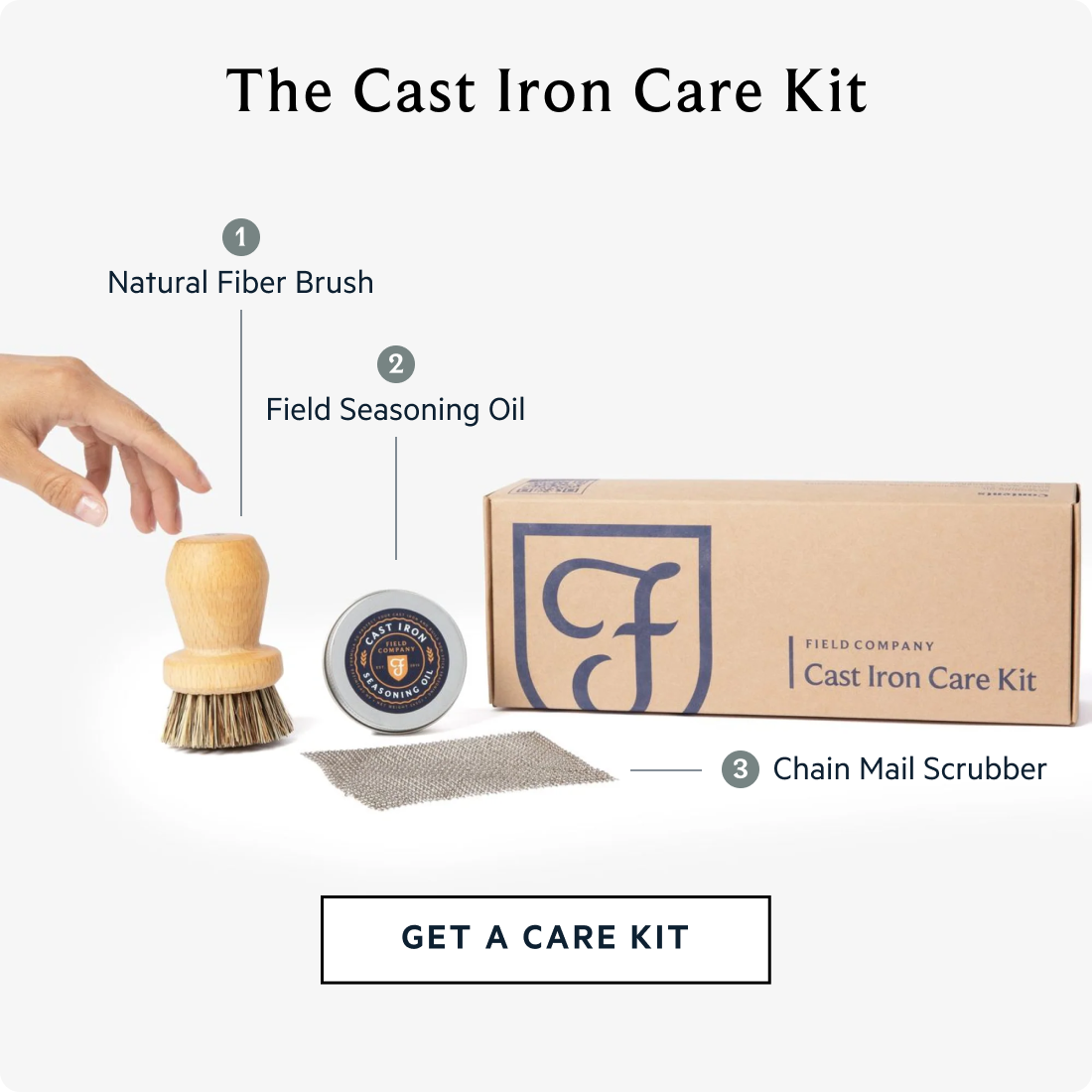
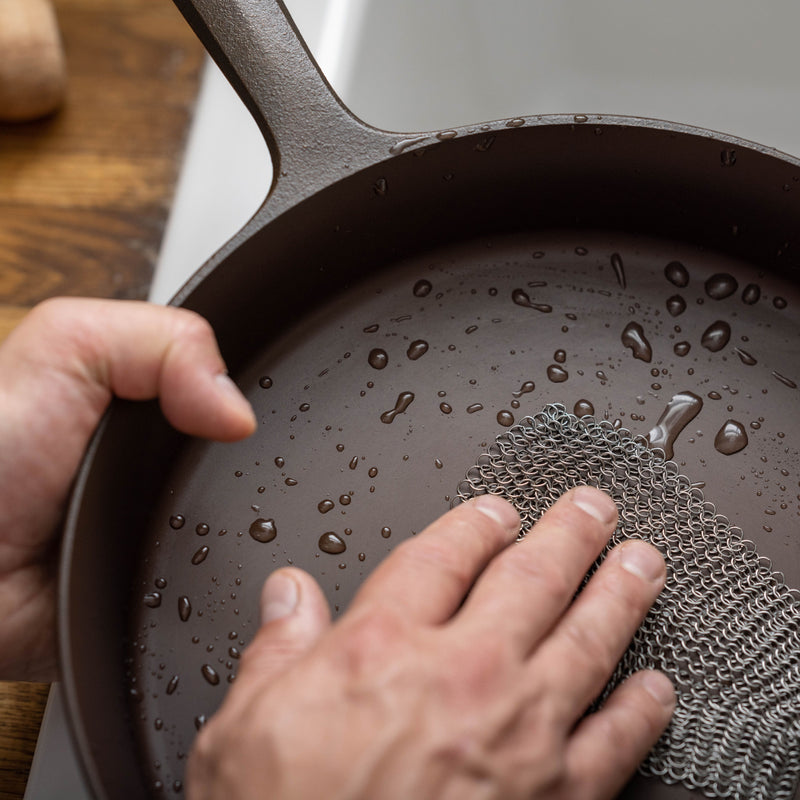
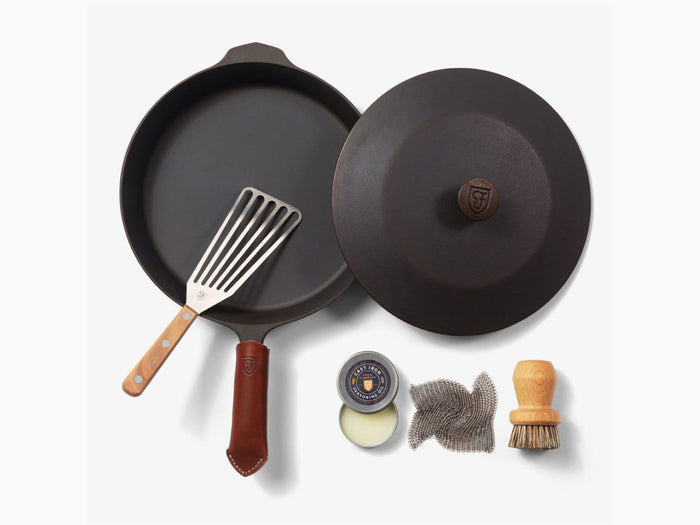
While it's still warm, rinse it with hot water and scrub with a brush or chain mail scrubber. Soap is optional—a little won't hurt the seasoning. Dry it completely, then wipe on a thin layer of oil and it's ready for next time. Read the Field Method for cast iron care →
A little sticking early on is normal while the seasoning builds. Heat the pan before food goes in, use enough fat and don't crowd it. Every cook adds another layer, and because our surface is polished smooth, it seasons faster than rough cast iron. Within 15–20 uses most people find eggs slide right off. How to season cast iron →
Yes. Cast iron is magnetic, so it works on induction, and the base is designed to sit flat and balanced on glass and ceramic cooktops. It works on gas and electric too, and goes in the oven, on the grill or over a campfire. Cast iron on induction cooktops →
Every Field Skillet is cast and polished in the United States, at foundries and finishing shops in Wisconsin, Missouri and Indiana. We're a family-owned company, and we've been making cast iron here since 2016. Where Field Skillets are made →