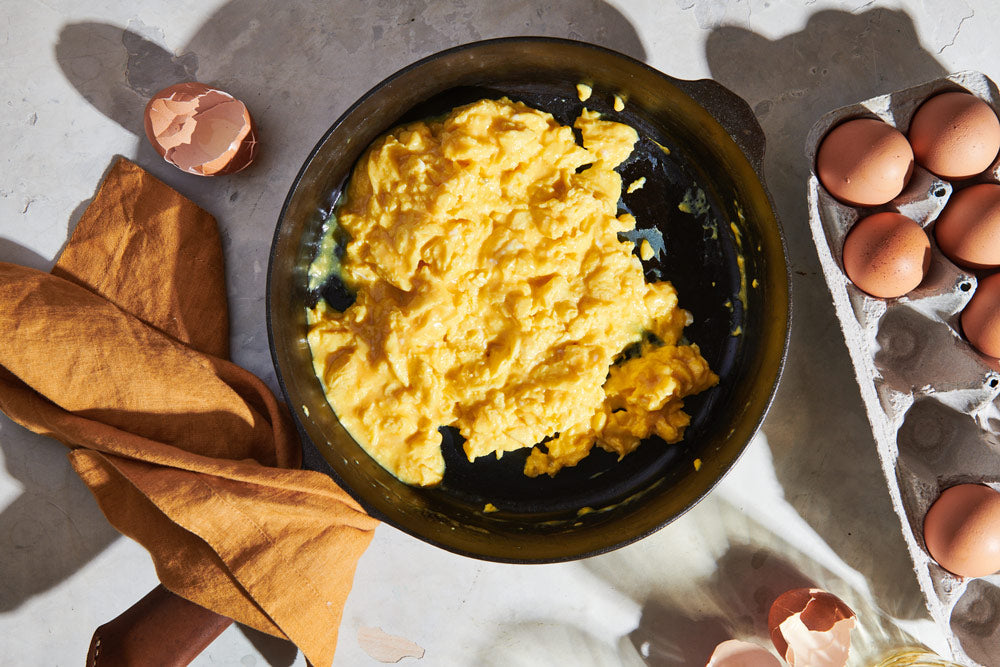
Standard scrambled eggs in cast iron come down to two things: a proper preheat and restraint on the heat. Cast iron needs time to heat evenly, and rushing this is where most people go wrong. But give it a few minutes and you'll be rewarded with eggs that are softer, more flavorful, and more satisfying than anything made at higher heat.
The technique is simple: preheat low, add fat, and then resist the urge to stir constantly. Let the curds build from the edges toward the center, folding rather than breaking them apart. Pull the pan off heat while the eggs still look slightly underdone—the residual heat from the cast iron will finish them in about 30 seconds.
Which Skillet to Use
This recipe is sized for the No.8 Field Skillet. For a single serving, halve the recipe and use the No.5 Chef Skillet—its sloped walls make stirring and folding curds effortless, and at 2.2 lbs it's easy to maneuver one-handed.
Field Notes
- Butter is the more forgiving fat for scrambled eggs—it spreads evenly, adds flavor, and gives you a built-in temperature cue: it should foam gently when it hits the pan. If it browns immediately or spits, your heat is too high.
- A splash of water whisked into the eggs creates steam as they cook, which makes the curds lighter and fluffier. Milk or cream works too, but water keeps things cleaner. That said, it's perfectly fine to be a purist—just eggs, butter, and salt is all you really need.
- Because cast iron retains heat so well, it will continue cooking the eggs even after you remove the pan from the burner. Move them to a plate the moment they reach your preferred texture—they'll firm up slightly as they rest.